Technical Assistance for Household Surveys in Support of National Health Support Program (NHSP) and Punjab Family Planning Program (PFPP)
Technical assistance to provincial governments for household surveys supporting health and family planning investments in Punjab, Khyber Pakhtunkhwa and Sindh.
Project Overview
About the project
The project provides technical assistance to the Governments of Punjab, Khyber Pakhtunkhwa and Sindh for multiple rounds of household surveys designed to support major health and family planning investments. The Population Council works with the provincial Bureaus of Statistics on survey design, instruments and institutional capacity strengthening, while also leading questionnaire development, high-level provincial engagement, stakeholder coordination through technical advisory mechanisms, analysis, and dissemination.
Resources
Project Resources
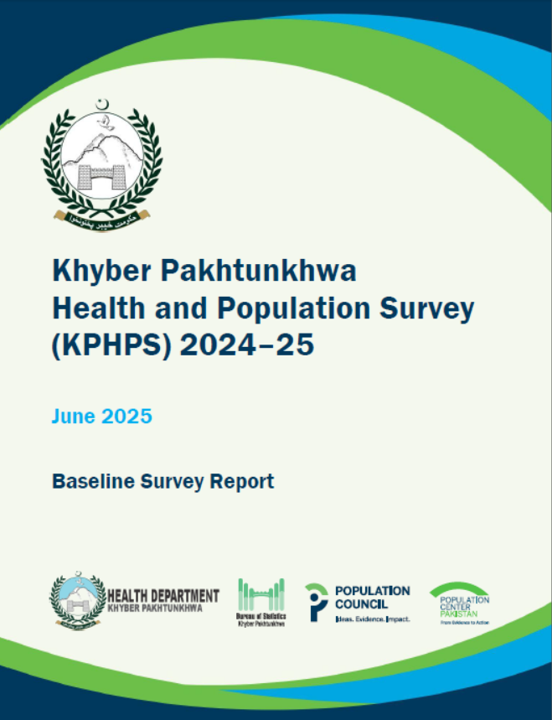
Baseline Survey Report
KPHPS 2024–25 Baseline Survey Report
The Khyber Pakhtunkhwa Health and Population Survey (KPHPS) 2024–25 provides a district-representative baseline for the National Health Support Program across all 35 districts of Khyber Pakhtunkhwa. The survey covers household and socioeconomic conditions, maternal health, fertility, family planning, infant and child health, immunization, communicable and non-communicable diseases, WASH, general health, and the Universal Health Coverage Service Coverage Index. Data were collected from 23,536 households and 28,063 ever-married women, providing a comprehensive evidence base for monitoring health equity and service delivery.
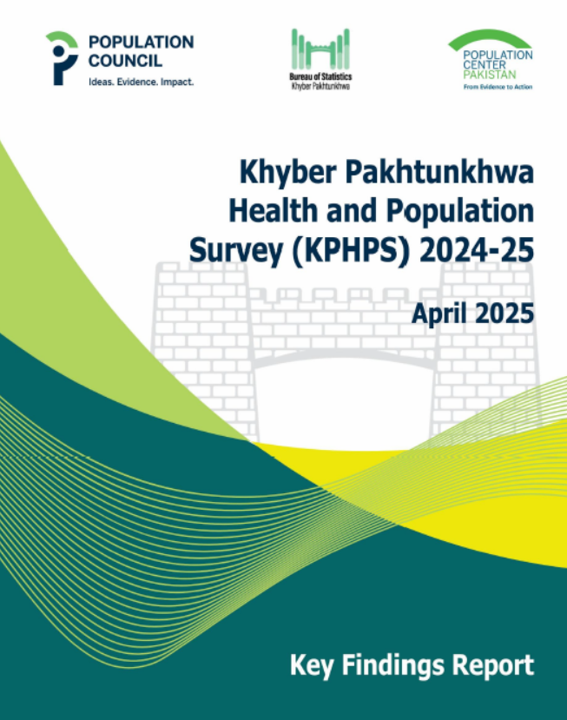
Key Findings Report
KPHPS 2024–25 Key Findings Report
The KPHPS 2024–25 Key Findings Report presents the principal province-wide and district-level indicators from the survey, including Universal Health Coverage, antenatal and delivery care, contraceptive use, child immunization, infectious and non-communicable diseases, and WASH. It highlights substantial disparities between lagging and non-lagging districts and provides a concise evidence base for monitoring progress under the National Health Support Program.
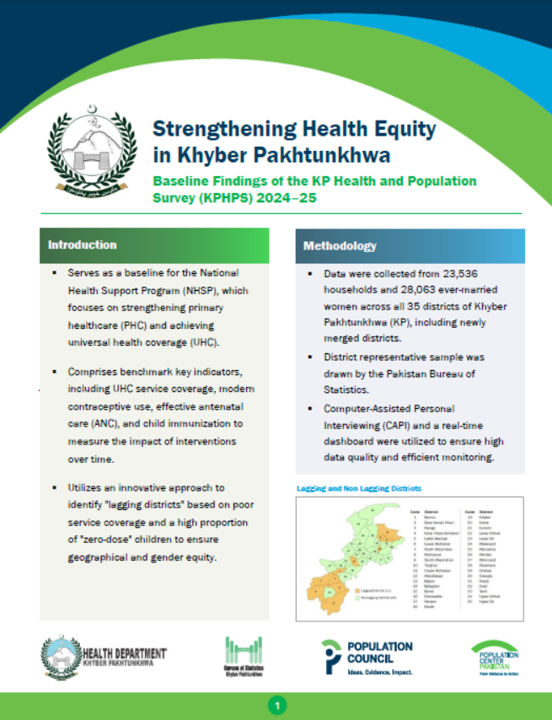
Policy Brief
Strengthening Health Equity in Khyber Pakhtunkhwa
This policy brief synthesizes the KPHPS 2024–25 baseline findings to identify priority gaps in maternal health, family planning, child immunization, and Universal Health Coverage in Khyber Pakhtunkhwa. It emphasizes geographic and socioeconomic inequities, particularly in lagging districts, and recommends targeted action to strengthen antenatal and postnatal care, skilled birth attendance, contraceptive access and counseling, immunization, integrated service delivery, and evidence-based behavior change communication.
Baseline Survey Report
PHPS 2024–25 Baseline Survey Report
The Punjab Health and Population Survey (PHPS) 2024–25 provides a district-representative baseline for the National Health Support Program and Punjab Family Planning Program across all 36 districts of Punjab. The report examines household and socioeconomic conditions, maternal health, fertility, family planning, integration of family planning into maternal care, infant and child health, immunization, communicable and non-communicable diseases, access to general healthcare, and the Universal Health Coverage Service Coverage Index.
Key Findings Report
PHPS 2024–25 Key Findings Report
The PHPS 2024–25 Key Findings Report summarizes the main health and population indicators for Punjab, including the Service Coverage Index, antenatal and delivery care, family planning and counseling, postpartum contraceptive uptake, child immunization, infectious and non-communicable diseases, and WASH. The report compares outcomes between lagging and non-lagging districts and provides a concise benchmark for tracking progress under provincial health and family planning programs.
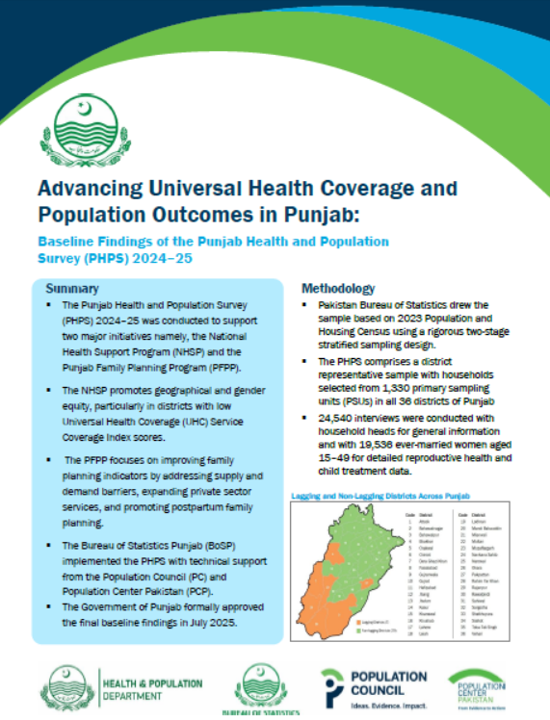
Policy Brief
Advancing Universal Health Coverage and Population Outcomes in Punjab
This policy brief translates the PHPS 2024–25 baseline findings into priorities for improving Universal Health Coverage and population outcomes in Punjab. It highlights gaps in continuity and quality of maternal healthcare, high cesarean-section prevalence, inequities in family planning access and counseling, child immunization gaps, and district-level disparities. The brief draws on a district-representative survey of 24,540 households and 19,536 ever-married women and identifies policy and service-delivery actions for stronger, more equitable health outcomes.