Reinvestment to Implement Family Planning Taskforce Recommendations in Pakistan
A policy and advocacy initiative supporting implementation of national family planning recommendations, resource mobilization, adoption of High Impact Practices and expansion of data systems.
Project Overview
About the project
Through a sub-grant from the Population Council, the Population Center supported follow-up to the 2018 Council of Common Interests decisions on family planning and reproductive health. Activities included engagement with parliamentary and policy forums, evidence-based advocacy for domestic and international financing, support for a steering mechanism to encourage adoption of High Impact Practices, and extension and enhancement of the Integrated Health & Population Dashboard (IHPD).
Resources
Project Resources
Brief
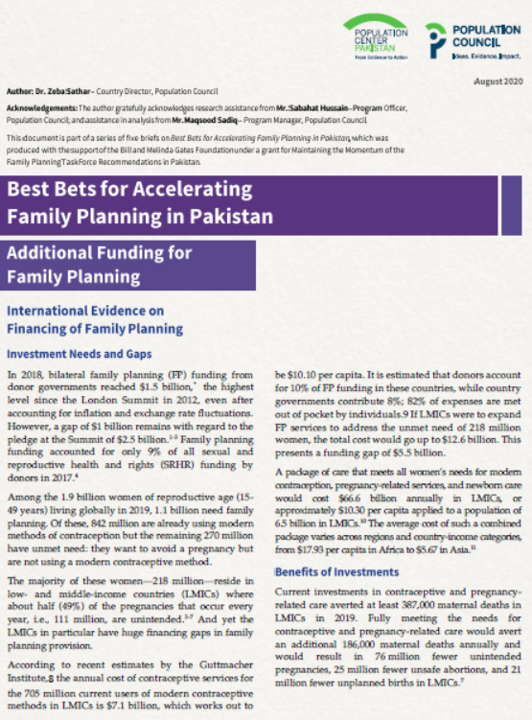
Additional Funding for Family Planning
This brief makes the case for additional and sustained financing for family planning in Pakistan, drawing on international evidence on investment needs, financing gaps, and the wider health and development benefits of expanding access to contraceptive services.
Brief
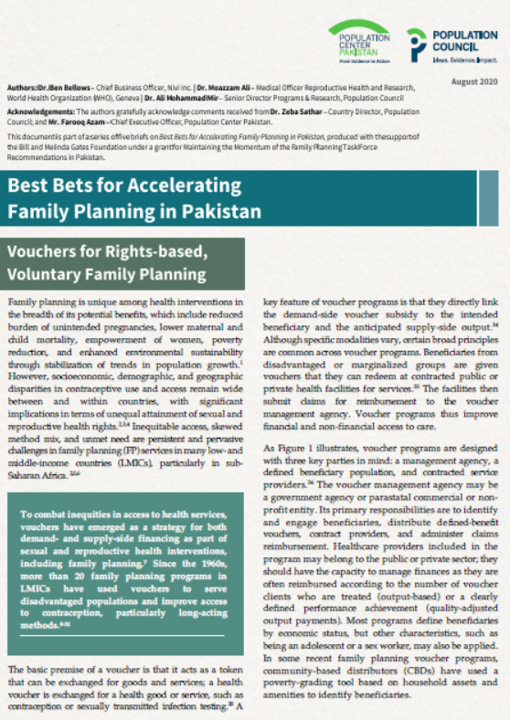
Vouchers for Rights-based Voluntary Family Planning
This brief reviews international and Pakistan evidence on family planning vouchers as a demand- and supply-side financing mechanism to improve equitable access, expand contraceptive choice, and reach underserved populations while maintaining voluntary and rights-based service delivery.
Brief
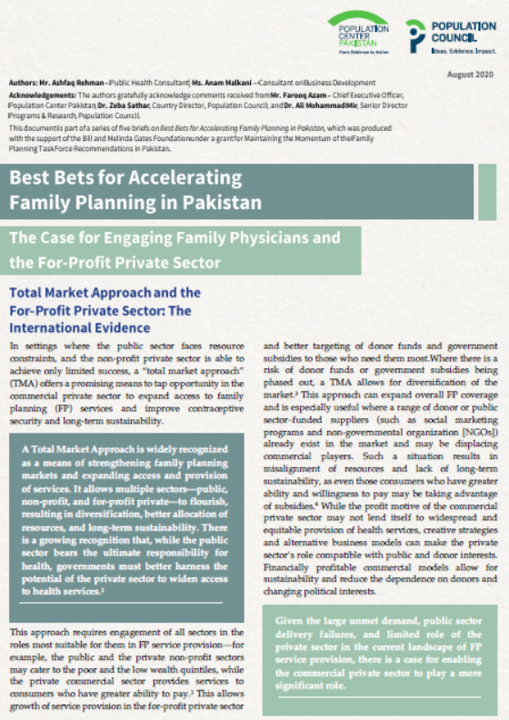
The Case for Engaging Family Physicians and the For-Profit Private Sector
This brief examines the potential of family physicians and the commercial private sector to expand access to family planning in Pakistan through a total market approach, including provider engagement, pharmaceutical-sector participation, training, commodity access, and sustainable business models.
Brief
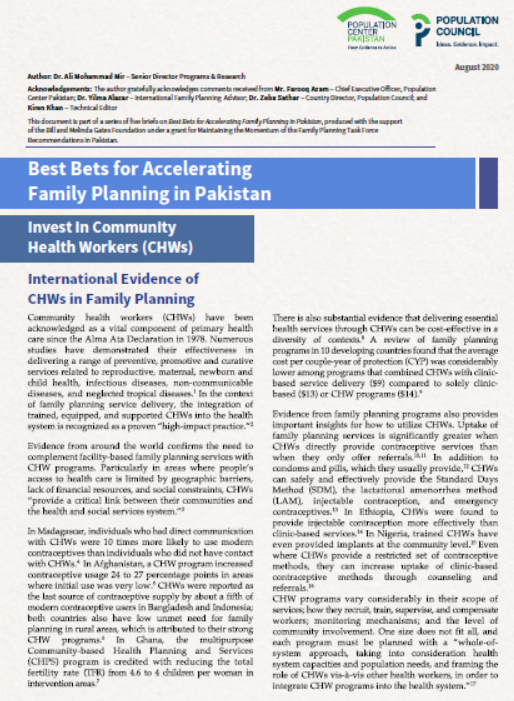
Invest in Community Health Workers (CHWs)
This brief reviews international and Pakistan evidence on the role of community health workers in family planning and considers how trained, equipped, supervised, and supported community-based workers can complement facility-based services and improve access for underserved communities.
Brief
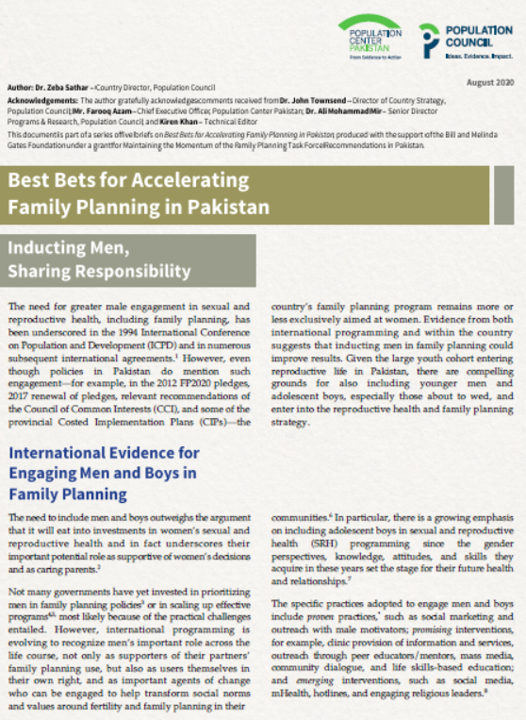
Inducting Men, Sharing Responsibility
This brief examines why men and boys should be engaged more systematically in family planning and sexual and reproductive health, including as supportive partners, contraceptive users, and agents of change in social and gender norms.